Amplifund: The Treasury’s Guidance for State and Local Fiscal Recovery Funds (SLFRF)
|
||||||
|
||||||

Have you ever thought to yourself “I want to make the most of my NGMA membership and get more involved in the NGMA community, but I just don’t know how”? I want to share four simple ways that you can get engaged with NGMA that goes beyond merely attending monthly webinars and the annual grants training. These are concrete suggestions of how to volunteer and engage socially and professionally with your fellow peers.
Getting involved with NGMA benefits both you and the greater grants community. By taking advantage of any of these opportunities to get involved, you may be able to expand your network, learn valuable insights from your peers, build your professional profile, and give back to an organization that has uniquely benefited your career.
1. Volunteer on an NGMA Member Committee
There are a surprising number of opportunities to volunteer your time with NGMA. Whether you are new to grants management or if you a well-seasoned veteran in the field, there is a volunteer opportunity for you that will fit your strengths and talents. For example, there are many NGMA’s Member Committees that you can volunteer on.
To volunteer, visit the simply visit the NGMA Member Committees webpage and reach out to the NGMA Staff liaison of the committee that you are interested in.
In addition to the national member committees, there may be opportunities to volunteer at your local chapter level. And for those experienced and well-established NGMA community members there is always the opportunity to serve on the board as well.
Volunteering requires a small-time commitment but has a huge impact on how NGMA serves its members and our community. Serving is also an opportunity to shape your own experience as an NGMA member.
Most importantly volunteering with NGMA is an opportunity to connect with your fellow peers who are working behind the scenes to continually add value to our grants management community.
2. Participate in NGMA’s Members Only Discussion Board—NGMA Community Forum
One of the best ways to keep up to date with the constantly changing grants management field is to participate in the NGMA Community Forum. You can connect with fellow chapter or sector members and subscribe to receive periodic updates right to your inbox, so that you always know the latest issues and updates in the grants management world.
I know that I have used this resource to leverage the experience of my peers on several occasions, and I always try to reciprocate by answering others’ questions when I can. So, if you have not had the opportunity, try posting a question, or answering one, try starting a CGMS study group, or try joining your local chapter’s discussion board. There is no limit to how we can use our network to help and support each other.
3. Engage at AGT
As an NGMA member, chances are that you have likely attended the yearly grants pilgrimage known as the Annual Grants Training (AGT). But maybe you have not seen the tireless effort of staff and volunteers behind the scenes putting it all together. Volunteering to help with the AGT is a great way to meet the NGMA staff as well and the renowned speakers that share their excellent learning sessions at the meeting each year. Volunteering is easy too. Whether it is joining the Education Committee to help review and approve of presentations, volunteering to be a moderator for several sessions, or volunteering to check attendees in at our next in-person meeting, there are plenty of ways to participate. Keep an eye out for communications from NGMA staff for your opportunity to participate next year.
4. Get Your CGMS Certification
The process of studying for and sitting for your CGMS credential is a unique but important way of getting involved in the grants community. The immediate reasons to get you CGMS are obvious, but the journey to getting it and the esteemed community that you join after you get your credential are equally as important. If you are eligible to take the exam, I highly encourage you to start or join a CGMS study group, take the GMBoK training, and join the community of CGMS holders.
I can attest from my own experience, that being active with NGMA has opened a lot of doors for me and has been essential to my continued growth as a grants management professional. Please consider getting involved if you can and remember it is never too early or too late to get involved in our NGMA community.
About the Author:
Brent Ramsey, CGMS is a Compliance Manger at the non-profit SCORE and is Vice-Chair of the NGMA’s Education Committee. Brent has been a member of NGMA since 2018.

Setting standard processes is critical to maintaining compliance. After the passage of the Digital Accountability and Transparency Act, (DATA Act) in 2014, the Office of Management and Budget’s (OMB) Uniform Grant Guidance (UGG), and the Grant Reporting Efficiency and Agreements Transparency (GREAT) Act of 2019, all organizations receiving Federal funds are required to report their spending data using government-wide data standards.
When it comes to compliance, UGG requires standard reporting to ensure good controls are in place during an audit; however, what those standard reporting processes must entail is not very prescriptive, so your organization will have to answer questions when deciding what these processes can, or should, look like. Such as:
The processes that your organization may choose to implement, or already follow, can include additional steps that are not specifically required by any key legislation, and may include the addition of departmental specifics, people, and additional data collection practices. This blog post aims to provide some best practices for both grant seekers and grant makers that you can implement in your organization to drive best practices, maintain compliance, and maximize your outcomes.
Data Management & Systemization
According to paragraph 4(c)(2) of the DATA Act, organizations must, to the extent that it is reasonable and practical, “incorporate widely accepted common data elements,” and/or “incorporate a widely accepted, nonproprietary, searchable, platform-independent computer-readable format.” A common interpretation of this language is your processes should revolve around the standardization and systemization of data. Collecting key data in a systematized manner will also allow for multiple form completions and can help expand the capacity of your resources. A grant management software can assist you with centralization and standardization.
Personnel Identification and Sign-Off Procedures
To drive best practices as a grant seeker or grant maker, you must identify the key personnel that will need to sign-off on the pursuit of, awarding of, or monitoring of funds. While the personnel involved from award to award may change, the implementation of a specific level or role of sign-off will help maintain compliance and minimize audit struggles. A process that requires internal sign-off further ensures agreement across key programs and departments. In addition, standard operating procedures regarding authorization will further increase transparency, which will provide financial visibility into the status and health of various programs or awards.
Application
Grant Seeker
Creating a standard process for tracking the grants you apply for holds both your team members and your organization accountable for the success of your grant portfolio. Maintaining these application records in a centralized location will help ensure that your team members will not apply to competing, or the same, funding opportunities as their colleagues, as well as be able to track your success rate.
Grant Maker
Standardizing your grant application will ensure a fair and equal application process for all applicants. By creating a standard application, you can effectively evaluate which programs are best suited for your organization’s mission using the same criteria, which will help you distribute funds in an inclusive and equitable way. By creating a concise application that is accessible online, or through an applicant portal in your grant management software, you can further ensure that the application process will be both accessible and standardized for your applicants.
Application scoring is a critical internal function of making awards; and standardizing a review and scoring process ensures that each application is reviewed in the same way by the correct reviewers at the appropriate time. Creating a review process and workflow for application scoring creates internal visibility into the status of the overall applicant portfolio for your organization. It can also help you begin to determine what kinds of monitoring may be required for your pool of recipients.
Reporting Structures
Grant Seeker
Establishing standard reporting structures once a grant is awarded will provide financial oversight and can help your organization adhere to a timeline with milestones that can be used for benchmarking. While you may already have a specific form in use for different funding streams, you can create a process that keeps the structure of reporting similar from award to award to provide consistency in reporting within your organization.
Grant Maker
In order to monitor the performance of your recipients, you’ll want to create a process that requires standard reporting structures at regular intervals. Your process for reporting should drive standard reporting structures that include benchmarking milestones to a timeline, so you can gain insight into your recipient’s project performance. While there might be specific data elements in use for different funding streams, the structure of the reporting process itself can be similar.
Achieving Compliance
Due to the importance of creating standard processes, the need for centralization, and to drive the creation of accurate, systematized reports, your organization may choose to implement a grants management system (GMS) to help maintain compliance, implement effective and efficient processes, and drive accountability.
Whether you are a grant seeker, a grant maker, or both, the creation of processes to collect standard data is critical for maintaining compliance.
A configurable grant management system can help your organization create and maintain standard processes and workflows. Check out our blog on how you can further help standardize your grant portfolio management.
| We’re excited to share the launch of our new microsite in partnership with Government Technology!
Click HERE to Learn More ________________________________________________________________ |
|||
| Grants Made Simple
Simplify your entire grants process with innovative software and services designed by practitioners and Certified Grants Management Specialists. |
|||
| _________________________________________________________________________ | |||
| Hero Highlights
Hear the real stories of grant professionals making an impact in the communities using eCivis solutions. |
|||
 |
 |
||
| Learn how CA HCD managed over $811.7 million in COVID-19 funding. |
Learn how Detroit increased its grant revenue by over $202 million. |
||
 |
 |
||
Learn how Atlanta increased its number of annual qualified proposals by 44% |
Learn how Harris County was able to track as many as 750 grants at the same time. |
||
| _____________________________________________ | ||||
| Guides, Playbooks and Infographics | ||||
 |
 |
 |
 |
 |
| How States Can Partner with Local Government to Distribute Relief funding |
How to Assemble a Successful Government Grant Proposal |
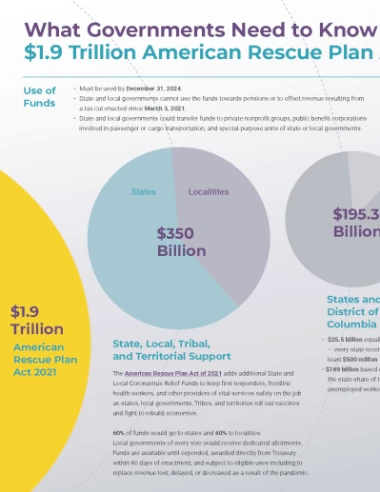
What Governments Need to Know about the $1.9 Trillion American Rescue Plan |
Transforming Grants Management: How Lessons from a Once-in-a-Century Pandemic Illuminate the Path Forward |
Measuring Grant Performance and Accountability in the Era of Covid-19 |
| _________________________________________________________________________ | ||||
Webinars and Online Courses
|
||||
|
|||
It goes without saying that 2020 has presented some serious challenges for state and local governments.
Never before have governments had to navigate the magnitude of funding–over $150 billion from the Coronavirus Relief Fund under the CARES Act– and distribute it in such a short amount of time.
Unlike the typical grants process, where you prepare a plan, indicate how you’re going to spend the money, do the work, and then get reimbursed, the urgent nature of the pandemic has forced governments to account for their spending in the aftermath.
So how can governments efficiently and transparently navigate this unchartered territory?
Learn more in our first-ever Hero Highlight (where we share how inspiring grants leaders and their associated governments innovatively managed their grant funding and delivered incredible impact to their communities).
Through a deliberate and careful process of strategic planning, Cheryl Harrison-Lee, Interim Executive Director of the Recovery Office (and our heroine of this hero highlight) helped the state of Kansas manage over $1.043 billion in CARES Act funding and established a framework that served as a financial reporting template for benchmarks and metrics. Cheryl shares the state of Kansas’ lessons learned and what other governments can do to ensure similar successes of their own.
Establish Community Priorities First
One of the most significant challenges for governments has been determining how and where to spend funding as effectively and efficiently as possible. During her tenure, Cheryl and her team focused on developing strategic priorities revolving around the biggest impacts of the pandemic: health, education, connectivity, and the economy. Once they analyzed the major impacts of COVID-19, they were able to quickly delineate priorities at the state level and outline priorities at the county level as well.
Having served at the local, city, county, and state level, it was easy for Cheryl to apply her strategic planning and priority-based budgeting expertise that spoke to the needs of a wide variety of communities. Ultimately, the funding addressed healthcare (i.e. more testing) and helping small businesses reopen safely (i.e. PPE and business continuity). The most important distribution method for Cheryl and her team was using the reliable “tier method.”
“We implemented a tier system where the state distributes to the county and the county distributes to the cities,” Cheryl said. “This allows local governments to directly receive their money and work within their communities. Kansas has 103 counties so by staying at the county level, it allowed us to be efficient and expedient.”
This helped save significantly on the timeline of deciding who would get the funding, which would have been exacerbated if Cheryl and her team had to work with every single city and county within Kansas.
Avoid the “Government-Alone” Approach
Given the ever-narrowing timeframe that governments have to incur their CARES Act funding (Dec. 30th being the deadline), the state of Kansas would not have been able to navigate on its own. For Cheryl, bringing in the perspective and voices of stakeholders in the form of a steering committee (which served as a planning advisory committee) and executive committee (which functioned as the recommending body to the Governor and State Finance Council) was crucial.
She and her team sought input from a wide range of public and private-sector stakeholders, including representatives from health, businesses, education, construction, and banking/finance communities. It was especially important that these stakeholders represented many voices. For example, one of the executive board members was the president of the Kansas Hospital Association. Cheryl expressed that without these voices, she and her team would not have been able to access all the ideas that they could as well as ensure everyone had their needs met. For the state of Kansas, it was all hands on deck.
“In a moment of crisis, there’s a heavy lift and that load requires everyone lifting all at once, instead of a government alone approach,” Cheryl said.
Ultimately, by including a diverse group of stakeholders from the beginning, Cheryl and the stakeholder committees were able to help the state get $700 million approved and $400 million of that amount was disbursed within 60 days.
What Governments Need to Do Now Before December 30th
According to Cheryl, it’s especially important that state governments do their utmost now to ensure subrecipient success. She advises that governments take the following steps before the big December deadline:
On March 19, the White House Office of Management and Budget (OMB) issued a memorandum for the heads of executive departments and federal agencies (M-21-20).
This memo was released to give guidance to federal agencies to foster accountability and public trust by delivering effective and equitable relief, while implementing sound financial management of the resources funding that relief. This will include working with the Pandemic Response Accountability Committee (PRAC) and agency Inspector Generals to strengthen payment integrity so governments can minimize the risk of waste, fraud, and abuse. Additionally, the guidance aims to help governments improve the overall award and administration of financial assistance programs with an increased focus on human-centered program and service design to achieve more equitable results.
Reducing Administrative Burden on Funding Recipients
In an attempt to help governments receive and distribute funding faster amidst the urgency of the pandemic, Appendix 3 of the OMB memo gives guidance to agencies on how they can reduce administrative burden on recipients’ performance and deliverables. The guidance applies not only to COVID-19 related awards, but also non-COVID-19 related awards.
The guidance is directed to the executive department and federal agencies by OMB in accordance with Uniform Guidance 2 CFR 200. Agencies may allow these exceptions as they deem appropriate and to the extent permitted by law.
Here are six of the 12 areas of guidance given to federal awarding agencies that will affect recipient awards:
1. Flexibility with SAM/recertification
Federal awarding agencies may relax the timing of the requirement for active SAM registration at time of application to expeditiously issue funding. At the time of award, the requirements of 2 CFR § 200.206, the federal awarding agency’s review of risk posed by applicants continue to apply. Current registrants in SAM with active registrations expiring between April 1, 2021 and September 30, 2021 will automatically be afforded a one-time extension of 180 days.
2. Waiver for Notice of Funding Opportunity (NOFO) Publication
Awarding agencies may publish emergency and competitive NOFOs for grants and cooperative agreements for less than 30 days without separately justifying shortening the timeframe for each NOFO. Recipients, however, will need to monitor funding opportunities and be prepared to compile an application in a shortened amount of time.
3. No-cost extensions on expiring awards
To the extent permitted by law, awarding agencies may extend awards that were active as of March 31, 2021 and scheduled to expire prior or up to December 31, 2021–automatically at no cost for a period of up to 12 months. This will allow time for recipient assessments, the resumption of many individual projects, and a report on program progress and financial status to agency staff. Project-specific financial and performance reports will be due 90 days following the end date of the extension. Awarding agencies will examine the need to extend other project reporting as the need arises. Recipients should contact their awarding agencies for information.
4. Abbreviated non-competitive continuation requests
For non-competitive continuation requests scheduled between April 1, 2021 and December 31, 2021, awarding agencies may accept a brief statement from recipients to verify that they are in a position to: (i) resume or restore their project activities and (ii) accept a planned continuation award. Agencies must post any specific instructions on their website as well as examine the need to extend this approach on subsequent continuation award start dates as recipients have an opportunity to assess the situation.
5. Extension of Single Audit submission
Awarding agencies, in their capacity as cognizant or oversight agencies for audit, should allow recipients and subrecipients that have not yet filed their single audits with the Federal Audit Clearinghouse as of the date of the issuance of this memorandum that have fiscal year-ends through June 30, 2021, to delay the completion and submission of the Single Audit reporting package, as required under Subpart F of 2 CFR § 200.501 to six months beyond the normal due date. Recipients and subrecipients taking advantage of this extension would still qualify as a “low-risk auditee” under the criteria of 2 CFR § 200.520.
Recipients with fiscal year-ends through June 30, 2021, will receive a six-month extension beyond the normal due date to submit to the Federal Audit Clearinghouse. Findings within the six-months after normal due date will not cause the entity to lose their ‘low-risk auditee’ designation.
6. Flexibility with application deadlines
Awarding agencies may provide flexibility with regard to the submission of competing applications in response to specific announcements, as well as unsolicited applications, presuming these exceptions do not negatively impact underserved communities. As appropriate, agencies should list specific guidance on their websites and provide a point of contact for an agency program official.
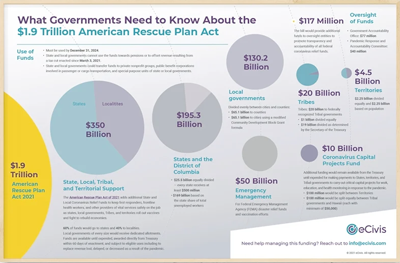
| What Governments Need to Know About the $1.9 Trillion American Rescue Plan ActHere’s your quick breakdown of how funding will be distributed among state, local, and Tribal governments and Territories
|
 |
||
| _________________________________________________________________________ | |||
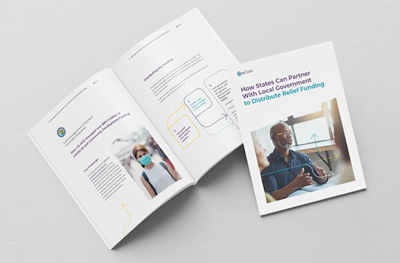
| How States Can Partner With Local Government to Distribute Relief FundingState and local governments are receiving the largest amount of grant funding yet that will be channeled to communities, small businesses, and individual citizens. In fact, for the very first time, as much as $60.1 billion will be distributed to cities using a modified Community Development Block Grant (CDBG) program formula. However, to ensure this funding actually has the desired impact in communities, multiple stakeholders must work together, especially when it comes to the timely distribution and management of those funds. |
 |
||
| _________________________________________________________________________ | |||
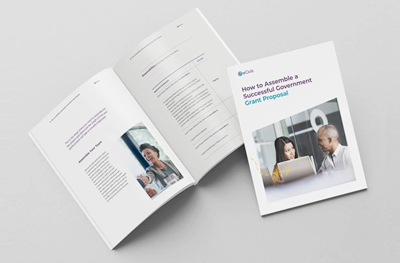
| How to Assemble a Successful Government Grant ProposalAt eCivis, one of the most frequently asked questions in our community of government professionals is “Is there a template out there for putting together a strong government grant proposal?” While no single template can address the complex and myriad types of funding opportunities, this playbook can help you get started.
|
 |
||
Everyone in your organization agrees that you need to begin centralizing your grant management processes. Now the question is, who is responsible for driving and overseeing this shift?
Assembling a Central Grants Office with key roles is one of the first steps leadership needs to take to centralize funding management. The main goals of a Central Grants Office are to provide organizational leadership and oversight over grant policy, evaluation, and training as well as to provide expertise on grant management systems and to streamline processes. That is why you need to rely on those who can make and drive central decisions.
While it may vary by organization, some key personnel from your organization who should be leading your centralization include:
1. Grants Coordinator
The role of grants coordinator is crucial in the Central Grants Office because this individual will essentially be running the office by leading the push for standards, transparency, and compliance around grants. This role will own all grants-related tasks and activities, both in and out of the Office, and will ensure everyone involved is effectively collaborating and communicating.
2. Grants Accountant
To achieve full centralization, there needs to be communication and transparency between the Finance Office and the Central Grants Office. Consider including the grant accountant in the Central Grants Office to facilitate this interaction. This person will also work on financial reports.
3. An expert on ERP and Data
To truly centralize grant management processes, all vital data points need to be connected. That is why an expert on Enterprise Resource Planning (ERP) and data should sit in the Central Grants Office so they can provide key leadership on existing financial tracking and integrations.
Further, the ERP expert will carry out decision-making across and between elements of the organization that rely on the ERP for implementing and tracking information related to Federal grant regulations.
4. Representatives from the key grant making agencies
Organizations need people in the Central Grants Office who can speak to current funding patterns, values, and risk – representatives from key grant making agencies.
This ownership is vital if an organization wants to achieve buy-in for their centralization plan.
5. Representative from political or executive leadership
Despite how critical it is, an organization can only achieve centralization, as is the case with most big organizational pushes, if there is buy-in and expertise from leadership. Therefore, a representative from political or executive leadership who can advocate for and expedite initiatives is needed in the Central Grants Office.
After team members have agreed to play a role in the Central Grants Office, it’s time to begin centralization practices. To start off on the right foot, the Grants Coordinator should consider it priority number one to develop and disseminate a set of grant management standards to your organization.
Want to learn the two other pillars for centralizing your grant management processes? Check out AmpliFund’s ultimate guide to Grant Management Centralization.
The recent introductions and updates of new Federal grant regulations are focusing on themes such as transparency, performance, and compliance. To succeed in all these efforts, experts in the grants space are suggesting organizations focus on the more overarching concept of centralization.
This has led to organizations evaluating if and how they should invest in centralizing their grant processes to increase transparency, monitor performance, and maintain compliance.
Specifically, the debate of ad hoc processes versus formal centralization has emerged.
What Are Ad Hoc Grant Management Processes?
Ad hoc processes, or the management of grants on a case-by-case basis, may have been the primary grant management method in the past, but now, only a select few organizations can continue this practice without risking non-compliance.
Ad hoc processes could suffice for your organization if you:
a. Have very few awards to manage
b. Have a limited amount of funding complexity
c. Have one or fewer Federal awards in your grant portfolio
How Can an Organization Formalize Grant Management Centralization?
For most organizations, taking the time to institute formal centralization processes will be necessary to improve outcomes and comply with regulations.
In general, there are three main pillars that set the stage for formal centralization processes. Organizations who require formal processes should focus on:
Formalizing centralization also extends further than just implementing internal processes and adopting tools. If organizations want to fully formalize centralization, they must also:
Performance measurement is one of the practices your organization will need to centralize if you take the formal approach. To learn more about effective performance management, read AmpliFund’s latest blog on the topic.