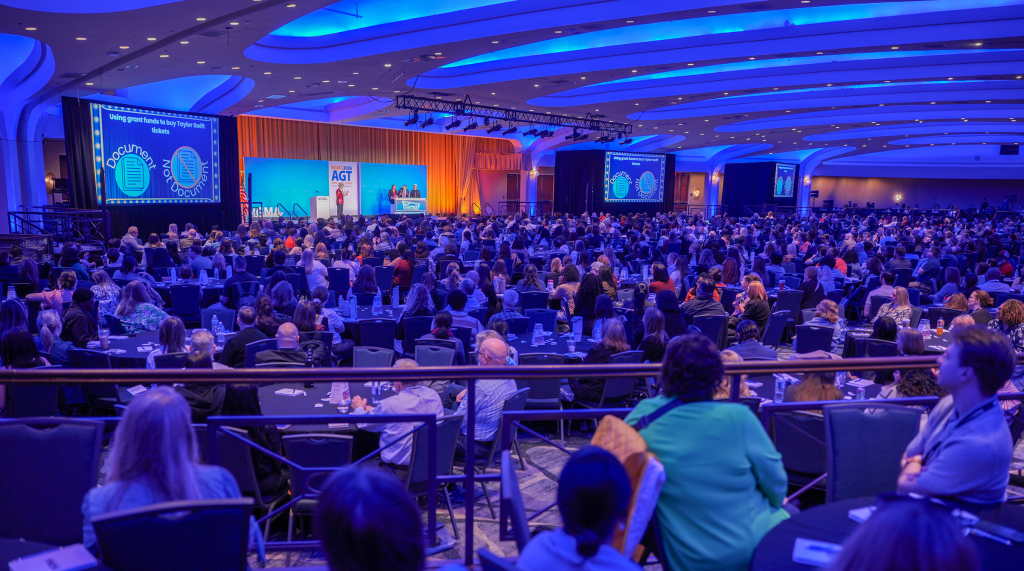
Attending the National Grants Management Association’s 2026 Annual Grants Training (AGT) was an important moment for me, both professionally and personally.
I work in grants finance and compliance, focusing on federal awards, indirect cost rates and audit preparation. Most of my daily work is technical—reviewing numbers, policies, and documentation. But during this training, I started to see my work from a wider perspective.
My Path into Grants Management
My professional journey in grants management did not start as a straight path. Over time, I moved into roles where I had to understand not only accounting, but also federal regulations, internal controls, and how organizations manage funding responsibly.
Working with nonprofit organizations, I saw how complex compliance can become. Even small misclassifications or unclear documentation can lead to audit findings or financial risk. This pushed me to focus more deeply on cost allocation, indirect cost rate development, and audit readiness.
At the same time, I realized that compliance is not only about avoiding risk but also about helping organizations operate more effectively.
Key Insights from 2026 AGT: Small Details Matter
One of my strongest takeaways from the conference was how small financial decisions can have a large impact.
Many sessions discussed indirect costs, internal controls, and audit findings. What stood out to me is that issues often do not come from major errors, but from small gaps such as unclear cost allocation methods, inconsistent documentation, and lack of coordination between finance and program teams.
Discussions around indirect cost rates showed that different rates within the same organization are not unusual. But without clear structure and explanation, this can create confusion or audit risk. This made me think more about how important it is to explain not only what we do, but also why we do it.
Compliance Is Not Just Rules—It’s Communication
Another important point I gained from the training is that compliance is not only technical work. It is also communication. Several sessions highlighted challenges between finance teams and program staff. Often, both sides are working toward the same goal but using different language or priorities.
I found sessions on audit response, internal controls, and risk management especially useful. They showed that strong compliance depends on early involvement of finance teams, clear documentation from the beginning, and ongoing communication across departments.
Throughout the training sessions, I asked questions that relate to my daily work and responsibilities. A specific question I posed was, why do some nonprofits use different indirect cost rates in the same fiscal year, and what risks can this create for compliance and audits? The discussion helped me better understand how cost structures can impact reporting and audit outcomes.
Another question I raised was what the biggest risks are when organizations do not clearly separate costs or revenue categories and how this affects audits. The discussion made me focus more on the importance of documentation and consistency in financial management.
One of the key discussion points was that when costs or revenue categories are not clearly separated, auditors often cannot trace how transactions were classified, which increases the risk of findings. The speakers also mentioned that inconsistent treatment across programs or funding sources can raise concerns about compliance with federal requirements. This helped me better understand that the issue is not only about correct classification, but also about having a consistent methodology and clear supporting documentation. Based on this, I realized I should focus more on strengthening documentation practices and ensuring that cost allocation approaches are applied consistently across all programs.
In another session, I asked where the biggest issues for organizations may be. The discussion helped me understand that many risks are not only technical but also related to internal processes and communication.
Several common issues were highlighted, including weak internal controls, lack of clear communication between program and finance teams, and inconsistent application of federal requirements across different grants. The speakers also noted that many organizations struggle not because they do not understand the rules, but because processes are not clearly defined or consistently followed. I connected this directly to my role, where I support financial management and compliance, and realized the importance of improving coordination between departments and ensuring that procedures are clearly documented and applied consistently. This is an area where I can contribute by helping strengthen internal processes and reduce the risk of audit findings.
From Technical Work to Broader Impact
Before attending AGT, I mostly focused on doing my work correctly, making sure numbers align, reports are accurate, and requirements are met.
After the training, I started thinking differently. Good grants management is not only about compliance. It supports transparency, accountability, and better use of public funds. When financial systems and cost structures are well designed, organizations can focus more on their mission instead of reacting to audit issues.
This shift from just compliance to broader impact is something I plan to continue developing in my work.
Looking Forward
In addition to learning, attending AGT also gave me the opportunity to connect with other professionals, ask questions during sessions, and exchange ideas about real challenges in the field. These conversations with peers were very valuable. They confirmed that many organizations face similar issues, especially as federal requirements continue to evolve.
I plan to continue strengthening my expertise in cost allocation and indirect cost rates, share practical insights with the grants community, and contribute to discussions that help improve compliance practices. I also hope to keep contributing to the NGMA community by sharing experiences and lessons learned.
Compliance is not just about following rules — it is about building systems that work. And when those systems work well, they create real impact beyond finance.
Roman Maynov is a grants and finance professional working at a national non-profit organization, specializing in federal grants compliance, cost allocation, and audit readiness. In his role, he supports financial management, budgeting, indirect cost rate processes, and internal controls to ensure compliance with federal requirements and reduce audit risk.